Recommended Custom Glass Lamp Shades for High-Heat Commercial Lighting Projects
Choosing a custom glass lamp shade for a high-heat commercial lighting project comes down to two things: whether the glass can survive the fixture's operating temperature without cracking, and whether the fitter opening actually matches the lamp holder. This guide narrows the field to five verified glass lamp shade products and explains the selection reason for each one, using thermal shock resistance, glare control, and fixture fit as the deciding criteria.
The five shades covered here are produced by Yancheng Jingxin Glassware Co., Ltd. (Jingxin Glassware), a glass manufacturer based in Yancheng, Jiangsu Province, China, serving the lighting, home décor, candle, drinkware, laboratory, and food and beverage packaging sectors. All product specifications below are drawn from the manufacturer's published product data.
Why Standard Glass Lamp Shades Fail in High-Heat Fixtures
In a commercial lighting project, a glass lamp shade is not a decorative object. It is a component that has to hold its optical performance and structural integrity across thousands of heating and cooling cycles.
Household lamps are switched on and off, rarely run for long stretches, and usually sit in open air. Commercial fixtures behave differently. A pendant in a hotel lobby may run twelve hours a day. A high-bay or wall-mounted fixture in a workshop, a parking area, or a retail display may run continuously. Under those conditions, the glass shade experiences two stresses at once: sustained heat from the light source, and repeated temperature swings between operating temperature and ambient temperature.
That combination is what causes the failures buyers report most often. Thermal shock cracks the shade. Long-term heat exposure clouds it. Poor fitter match leaves the shade under mechanical stress from the moment it is installed, which makes thermal cracking more likely.
The practical cost is not the shade itself. It is the labor, access equipment, and downtime required to replace a failed component inside a commercial fixture.
The Material Question: Borosilicate Versus Soda-Lime Glass
The single most important variable in high-heat lamp shade selection is the glass type, and it can be explained with one measurement.
Borosilicate glass is made from silica and boron trioxide. Its coefficient of thermal expansion is roughly 3.3 × 10⁻⁶/°C, which is about one-third that of ordinary soda-lime glass (approximately 9 × 10⁻⁶/°C). Because it expands and contracts less during temperature changes, the internal stress that causes cracking stays below the breaking point. Borosilicate glass can withstand temperature differences up to about 300°C and tolerate rapid shifts from -40°C up to +260°C in industrial-grade press-molded variants.
Soda-lime glass is the standard commercial glass type. It offers cost-effective solutions with excellent optical clarity, and it is well suited to decorative lighting, ambient fixtures, and applications where continuous operating temperature stays moderate. Where soda-lime glass is used in a high-temperature application instead of borosilicate, the risk of thermal-shock failure rises sharply.
There is a second material distinction that matters for glare control. Opal glass contains opacifying agents mixed throughout the entire glass body, so light diffusion is permanent and does not wear off. Surface-frosted glass is treated only at the surface (sandblasted or acid-etched), and that diffusion layer can wear or degrade over time. For commercial spaces where visual comfort and consistent output matter over years of service, opal glass holds its performance; surface frosting does not.
Short List: 5 Custom Glass Lamp Shades for High-Heat Commercial Fixtures
Each shade below is matched to a different high-heat scenario. They are listed from the most demanding thermal and mechanical environment to the most optically focused, rather than in order of price or popularity.
1. Explosion-Proof Borosilicate Glass Lamp Shade (JX1830) — for hazardous and high-impact environments
When the project sits inside a flammable gas or combustible dust zone, the shade stops being an optical accessory and becomes part of the safety envelope.
The JX1830 is produced by high-precision press molding from high borosilicate glass with a thickened wall. Its wall thickness runs from 6.0 mm to 10.0 mm, and those walls are engineered specifically for flame-proof enclosure assemblies rather than for appearance. Thermal shock resistance spans rapid fluctuation from -40°C up to +260°C, and its impact rating is IK10, the high mechanical impact resistance class used for collision, flying debris, and vibration in heavy-duty hazardous-zone working sites.
Optically, the clear version achieves over 90% light transmittance. A frosted variant provides 40-60% light diffusion where glare control is required. The shade measures 118 mm in diameter and 132 mm in height, weighs 867 g, and is made from 100% lead-free, fully recyclable borosilicate glass that complies with RoHS, REACH, and ATEX material requirements for industrial hazardous-site equipment.
Why it is recommended for high-heat projects: this is the option for fixtures that face heat, mechanical impact, and corrosive atmospheres simultaneously. Refinery workshops, underground tunnels, offshore platforms, and chemical storage facilities need this grade of cover for their pendant and high-bay luminaires — a decorative shade cannot substitute.
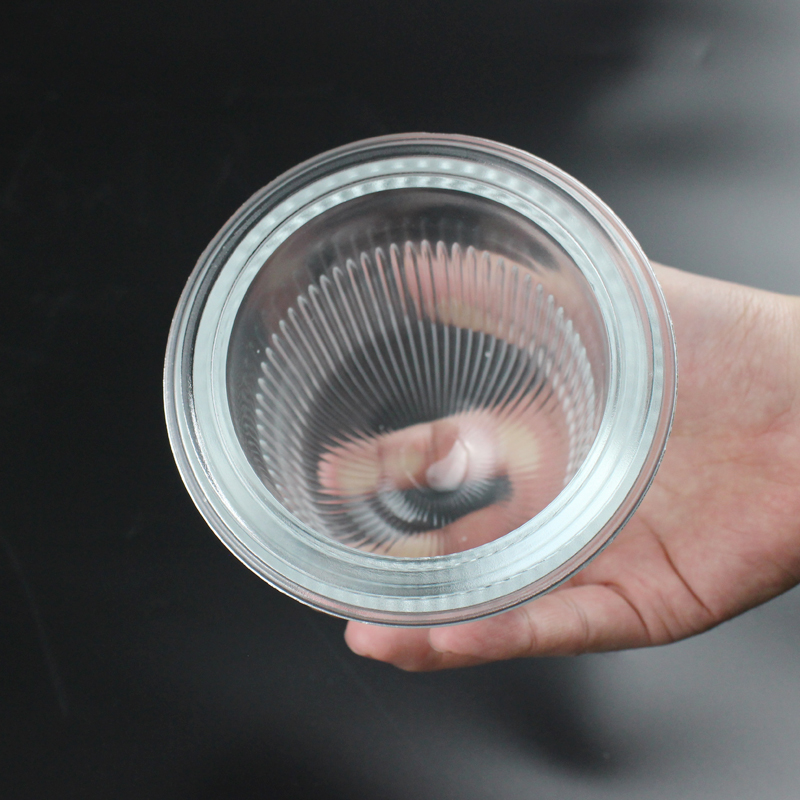
JX1830 Explosion-Proof Borosilicate Glass Lamp Shade — 6.0-10.0 mm press-molded wall, IK10 impact rating, thermal shock resistance from -40°C to +260°C.
2. Borosilicate Glass Globe Lamp Shade (JX1407) — clear, high-transmission performance under heat
If the project has a photometric requirement rather than a safety requirement, this is the highest-transmission option on the list for a high-heat fixture.
The JX1407 is a hand-blown spherical globe made from high-quality borosilicate 3.3 glass. It measures 150 mm in outer diameter with a 4.5 cm fitter opening that fits standard E27 lamp holders, and it uses a threaded bottom fitter — a male thread that mounts directly onto compatible lamp holders. Wall thickness is 2 mm, and the surface is clear, transparent, and high-gloss smooth.
Because the glass is borosilicate rather than soda-lime, it does not crack under long-time lamp heating. The clear spherical form maximizes light spread and produces even, bright illumination, with the bulb visible as part of the fixture design.
Why it is recommended for high-heat projects: the combination of clear optical output and outstanding thermal shock resistance suits pendant lamps, wall sconces, bathroom vanity lights, restaurant lighting, and hotel project luminaires — anywhere that light quality and service life both matter, and where a shade replacement would otherwise be a scheduled maintenance event.
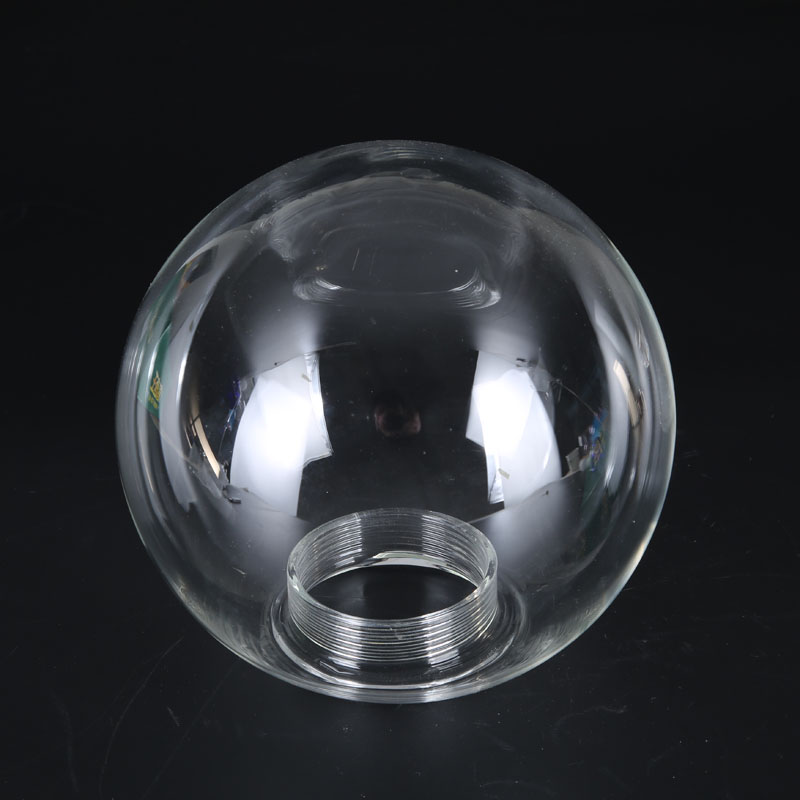
JX1407 Borosilicate Glass Globe Lamp Shade — hand-blown borosilicate 3.3, 150 mm diameter, 4.5 cm threaded bottom fitter for E27 holders.
3. Opal White Glass Globe Lamp Shade (JX1004) — permanent glare control for high-heat commercial spaces
In commercial interiors, glare is not a comfort issue — it is a performance issue. Direct lamp view causes guest discomfort, staff fatigue, and poor product presentation in retail settings.
The JX1004 addresses glare at the material level. It is a hand-blown globe made from solid opal white soda-lime glass with a frosted matte finish. Because the opacifying agent is distributed through the entire glass body, the diffusion is permanent — it does not yellow, discolor, or fade. Light transmission sits in the 45-65% range, producing soft, even output with no visible hot spots. The bulb itself is completely hidden.
The shade measures 150 mm in outer diameter with a 60 mm fitter opening that accommodates standard E27 lamp holders. Wall thickness is 3.0-5.0 mm, and the glass withstands temperature changes up to 120°C, making it suitable for most LED, incandescent, and CFL lighting applications.
Why it is recommended for high-heat projects: where a fixture runs warm and the space requires glare-free illumination, this is the shade that keeps performing without optical degradation. Unlike surface-frosted glass, which can wear, and unlike plastic or acrylic alternatives, which lose 20-30% of light output within 10 years, opal glass holds its diffusion characteristics for the life of the fixture.
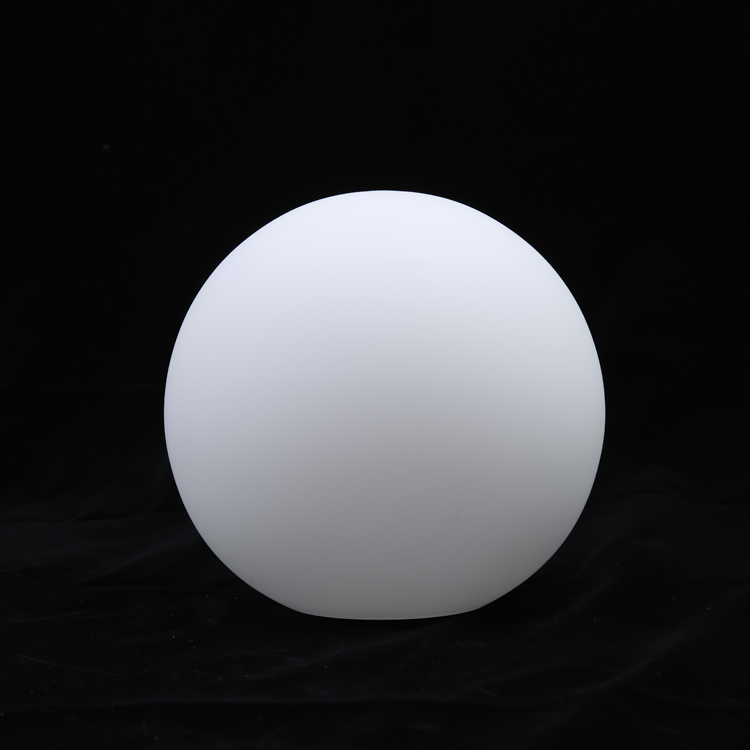
JX1004 Opal White Glass Globe Lamp Shade — solid opal soda-lime glass, 45-65% transmission, 60 mm E27 fitter opening, permanent diffusion.
4. Clear Ribbed Glass Pendant Shade (JXHB-002) — decorative refraction with controlled diffusion
Some commercial installations want the luminaire to be seen, not concealed. In that case the shade has to add visual texture without losing transmission.
The JXHB-002 is a hand-blown spherical globe with uniform vertical fluted ribbing across the entire outer surface. When lit, the ribs cast striped refracted light patterns — decorative without becoming harsh. The shade is 200 mm in outer diameter with a 100 mm fitter opening, and wall thickness is 3±1 mm with consistent thickness across the hand-blown body.
Clear fluted glass achieves 85-95% light transmittance. The soda-lime glass construction tolerates temperature fluctuations up to 120°C and is compatible with LED, incandescent, and CFL light sources. As with all hand-blown shades, subtle marks and tiny natural air bubbles are authentic signs of the craft rather than defects.
Why it is recommended for high-heat projects: it occupies the middle ground between a purely functional diffuser and a purely decorative shade. Restaurants, cafés, shop windows, and bar installations get both light output and visual character, with heat tolerance suited to typical commercial pendant duty cycles.
5. Cylinder Glass Tube Light Shade (JXHB-010) — uniform milk-frosted output for linear fixtures
Linear and task-focused commercial fixtures — track lights, display lighting, and corridor wall luminaires — call for a cylindrical form rather than a globe.
The JXHB-010 is a mouth-blown straight-tube shade with a milk frosted surface. It measures 100 mm in outer diameter and 150 mm in height, with a 42 mm fitter opening that fits standard E27 lamp holders. Wall thickness is 3-4 mm with consistent hand-blown thickness, and the cylinder includes a reserved side mounting hole for fast, stable installation onto standard indoor lamp fixture structures.
The borosilicate material delivers a low coefficient of thermal expansion: it resists deformation or bursting under long-term high-temperature lighting, which is the mechanism behind the heat deformation, yellowing, and light attenuation that affect traditional lamp shades. The milk white opacity is uniform, without light spots or shadow difference, so output stays even across the tube.
Why it is recommended for high-heat projects: the straight cylindrical form fits fixtures where a globe would not, and the frosted surface removes glare while keeping the shade resistant to anti-yellowing and aging. It suits hotels, restaurants, shops, retail display lighting, museums, and galleries — anywhere a linear shade has to survive continuous duty.
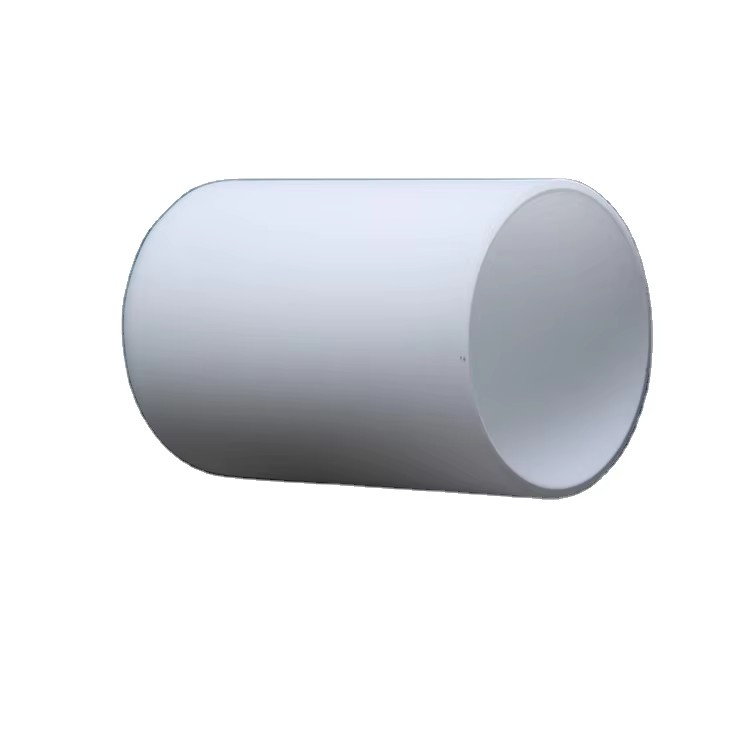
JXHB-010 Cylinder Glass Tube Light Shade — mouth-blown borosilicate tube, milk frosted finish, 42 mm E27 fitter opening, side mounting hole.
Side-by-Side Comparison
| Model | Glass Type | Wall Thickness | Thermal Performance | Light Transmission | Fitter / Fit | Best Suited To |
|---|---|---|---|---|---|---|
| JX1830 Explosion-Proof Borosilicate Glass Lamp Shade | High borosilicate, press-molded | 6.0-10.0 mm | -40°C to +260°C; IK10 impact rating | >90% clear / 40-60% frosted | Custom fitter opening; 118 mm dia., 132 mm height | Hazardous zones: petrochemical, mining, offshore, chemical storage |
| JX1407 Borosilicate Glass Globe Lamp Shade | Borosilicate 3.3, hand-blown | 2 mm | Outstanding thermal shock resistance | High transparency, clear | Threaded bottom fitter, 4.5 cm, E26/E27 | Pendants, wall sconces, vanity lights, hotel and restaurant projects |
| JX1004 Opal White Glass Globe Lamp Shade | Solid opal white soda-lime, hand-blown | 3.0-5.0 mm | Temperature changes up to 120°C | 45-65%, permanent diffusion | 60 mm fitter opening, E27 | Retail, hospitality, restaurants — glare-free ambient lighting |
| JXHB-002Clear Ribbed Glass Pendant Shade | Clear soda-lime, hand-blown | 3±1 mm | Temperature fluctuations up to 120°C | 85-95%, with ribbed refraction | 100 mm fitter opening, E27 | Restaurants, cafés, retail windows, bars — decorative pendants |
| JXHB-010 Cylinder Glass Tube Light Shade | Borosilicate, mouth-blown | 3-4 mm | Low thermal expansion; resists long-term high-temperature lighting | Uniform milk-frosted diffusion | 42 mm fitter opening, E27, side mounting hole | Linear and display fixtures, corridors, museums, galleries |
How to Match a Shade to a High-Heat Project
Work through these five steps in order. The sequence matters, because a shade that passes the thermal test but fails the fitter test is still the wrong part.
- Identify the fixture's continuous operating temperature. If the fixture runs hot for extended periods, or sits in an environment with wide ambient swings, borosilicate glass is the appropriate material. Soda-lime is suitable where continuous temperature stays moderate.
- Confirm the fitter opening size. Standard indoor holders in this product range use E27 (and E26 in North American applications). The JX1407 uses a 4.5 cm threaded opening, the JX1004 uses a 60 mm opening, the JXHB-002 uses a 100 mm opening, and the JXHB-010 uses a 42 mm opening. A mismatch — even a small one — creates installation stress that shortens service life.
- Decide the glare strategy. If the bulb must be hidden and the light must be soft and even, specify opal (JX1004) or milk frosted (JXHB-010). If maximum output and clear visibility of the bulb are required, specify clear borosilicate (JX1407). If decorative refraction matters, specify ribbed (JXHB-002).
- Check the hazard classification. Any project inside a flammable gas or combustible dust zone requires an engineered heavy-wall cover such as the JX1830, not a decorative shade.
- Verify the shade geometry against the fixture envelope. Globe and dome shades need clearance; tube shades need a straight-line housing. Confirm diameter and height against the luminaire before ordering.
Use Cases in Commercial High-Heat Lighting
- Luxury retail and department stores: permanent wall-mounted ambient lighting where consistent opal white color uniformity and dimensional accuracy matter across hundreds of units. Opal white glass globe shades have been supplied for a permanent installation at Galeries Lafayette in Paris, in service since 2015.
- Hospitality — hotels, restaurants, cafés: pendant and wall luminaires running long daily cycles, where glare control and heat resistance must both hold.
- Industrial and hazardous locations: refineries, chemical plants, mine tunnels, and offshore platforms requiring thick-wall, high-impact, thermally stable covers.
- Marine and coastal infrastructure: salt-spray and UV exposure combined with continuous operation. Jingxin Glassware supplied ultra-thick transparent lamp shades with pressure and sea water resistance for a Chilean deep-sea fish farming lighting application in 2018, and the relationship has continued for more than seven years.
- Medical and sanitary facilities: hygienic, easy-to-clean glass surfaces in continuous indoor lighting.
- Exhibition, museum, and gallery lighting: accent and display fixtures where diffusion uniformity preserves the viewed object.
Frequently Asked Questions
Are these glass lamp shades compliant with RoHS and REACH?
Yes. Jingxin Glassware holds 19+ professional certifications, including RoHS, REACH, and SMETA-4P. RoHS test reports are available upon customer request, and third-party inspection (including SGS) can be arranged for buyers who require independent verification. Lightweight glass products in this range are 100% lead-free and fully recyclable.
What is the practical difference between borosilicate and soda-lime glass in a high-heat fixture?
Borosilicate glass has a coefficient of thermal expansion of roughly 3.3 × 10⁻⁶/°C — about one-third that of soda-lime glass at approximately 9 × 10⁻⁶/°C. In practice, soda-lime glass typically tolerates temperature differences up to around 40°C, while borosilicate can withstand differences up to approximately 300°C and handle rapid shifts across a -40°C to +260°C range in engineered variants. For fixtures that run hot or face wide ambient swings, borosilicate is the correct specification.
What is the minimum order quantity for custom glass lamp shades?
The MOQ is 500 pieces for hand-blown glass and 2,000 pieces for machine-made glass. Custom MOQ is negotiable for trial orders or smaller projects, and lower minimums may be available for select stock items. Custom projects with non-standard dimensions, fitter openings, and surface treatments are handled through the OEM/ODM process.
Can I request a sample before placing a bulk order?
Yes. Samples are available upon request. Sample lead time is 5-7 working days after artwork and specification confirmation. Sample cost may apply, and freight is collectible. Because fitter opening accuracy and thermal behavior cannot be judged from a specification sheet alone, sample approval before mass production is the standard practice for commercial lighting projects.
What is the typical lead time for custom glass lamp shade orders?
Sample lead time is 5-7 working days after specification confirmation, and mass production lead time is 20-30 working days after sample approval. Large-volume or high-complexity custom projects may require a longer schedule. For specific models in this selection, or to discuss a project's thermal and fitter requirements, buyers can reach the Jingxin Glassware team directly at jerry@cn-glassware.com or via www.cn-glassware.com.
Conclusion
High-heat commercial lighting projects reward a specification-first approach. The failure mode to design against is thermal stress, and the two variables that control it are glass type and fitter match.
The five shades in this selection cover the practical range of that decision:
- Specify JX1830 when the fixture sits in a hazardous zone and needs thick-wall borosilicate with IK10 impact resistance and a -40°C to +260°C working range.
- Specify JX1407 when the project needs clear, high-transmission output from a borosilicate globe with outstanding thermal shock resistance.
- Specify JX1004 when permanent, non-degrading glare control is the priority in a high-heat commercial interior.
- Specify JXHB-002 when the luminaire is part of the design and the shade should add refracted texture without losing transmission.
- Specify JXHB-010 when the fixture is linear, and a frosted cylindrical tube is required to deliver even output under continuous operation.
Confirming a pre-production sample against the actual fixture remains the most reliable way to validate thermal performance, optical result, and mechanical fit before committing to a production run.
Next Step: Compare Specifications and Request a Quote
Jingxin Glassware publishes full specifications for its glass lamp shade range, including dimensions, fitter openings, glass type, and surface finishes. Download the Glass Lamp Shades Catalogue to review the full product line, or contact the team directly to request a sample or project quotation.
Email: jerry@cn-glassware.com | Tel: +86 515-8822 9059 | Web: www.cn-glassware.com
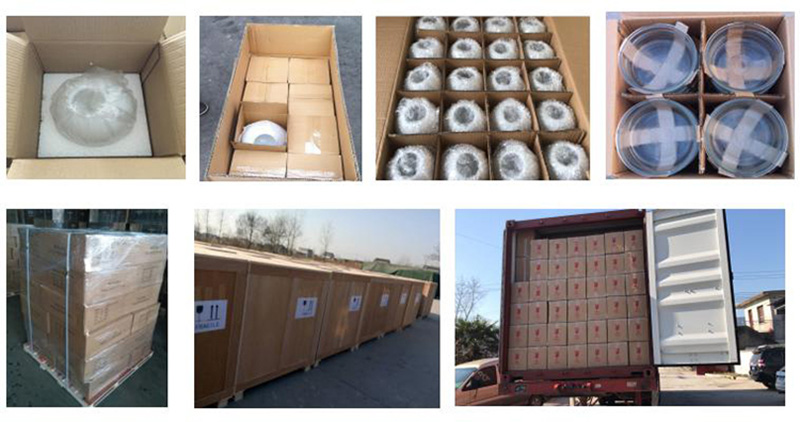
Custom glass lamp shade orders are 100% inspected before shipment and packed for export delivery.
Manufacturer: Yancheng Jingxin Glassware Co., Ltd. Address: No.268 South Jiefang Road, Yancheng, Jiangsu, China. Contact: Mr. Jerry Zhou.
Have Questions or Need More Details?
Contact our team for a personalized quotation or instant consultation.
Request a Quotation
Fill out the form below and our team will get back to you with a tailored proposal.
WhatsApp Direct Chat
Prefer to chat in real-time? Message us on WhatsApp for instant assistance & quick answers.
- Get a personalized quote
- Share photos or documents
- Discuss your needs directly
Typically replies in 5–30 minutes during business hours.