Glass vs. Plastic Lamp Shades for Commercial Lighting: A Custom Glassware Comparison Guide
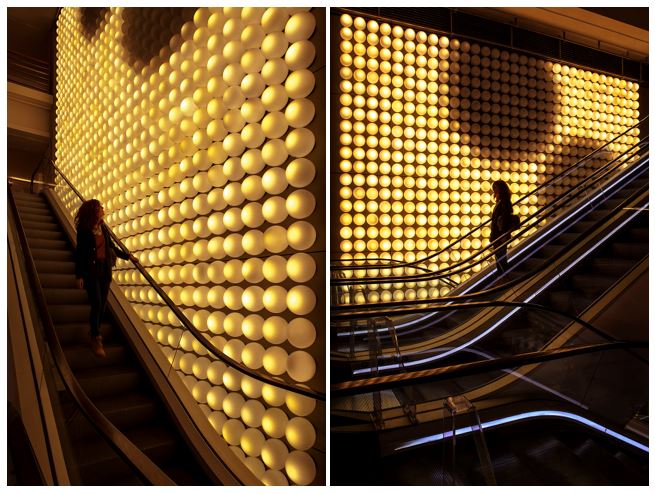
Opal white glass globe lamp shades for permanent commercial ambient lighting — Galeries Lafayette, Paris.
glass lamp shades and plastic lamp shades solve the same basic problem — diffusing light while protecting the bulb — but they behave very differently the moment heat, time, and commercial duty cycles enter the picture. For commercial lighting buyers in the evaluation stage, the real decision is rarely "glass or plastic" in the abstract. It is which material matches the thermal profile, optical requirement, and service life of a specific fixture. This guide compares borosilicate glass, opal glass, and soda-lime glass against plastic alternatives using verified product data, and explains exactly when plastic may still be a rational choice.
Problem Definition: What Actually Fails in Commercial Lamp Shades
A commercial lamp shade is not a static object. It sits inside a fixture that runs for thousands of hours, cycles on and off with the building's schedule, and is exposed to cleaning agents, dust, and — depending on the location — humidity, salt air, or industrial contaminants. Under those conditions, three failure modes dominate procurement complaints:
- Thermal cracking — the shade develops hairline cracks or shatters because the glass type cannot cope with the temperature difference between the bulb side and the ambient side.
- Optical degradation — the shade yellows, hazes, or loses light transmission, so the fixture becomes visibly dimmer and inconsistent with newer units nearby.
- Fit and dimensional drift — the fitter opening, wall thickness, or flange geometry no longer matches the lamp holder, causing wobble, rattle, or forced installation stress.
Plastic shades are genuinely strong against impact and price, but they are the most vulnerable to the second failure mode. Industry data on acrylic and polycarbonate alternatives indicates a light-output loss of roughly 20–30% within about ten years as UV exposure and heat cause yellowing and haze. In commercial venues where fixtures accumulate heavy operating hours, that decay becomes visible within a far shorter window. Glass — specifically borosilicate and opal glass — avoids this decay entirely because the optical structure is part of the glass body, not a coating.
Industry Background: Why Material Choice Is a Procurement Decision, Not a Design Preference
Commercial lighting covers a wide spectrum: hotel lobbies and guest rooms, restaurants and cafés, retail display lighting, office and public corridors, museum and exhibition fixtures, industrial workshops, municipal infrastructure, and hazardous-area lighting. Each environment imposes a different thermal and mechanical load on the shade.
That is why material selection in commercial lighting is really a procurement decision. Aesthetic preferences — clear versus frosted, ribbed versus smooth, opal versus tinted — come after the shade has been qualified for the environment. The qualification question is straightforward: can this shade survive the temperature swings, the light source heat, and the cleaning regime it will actually face?
Jingxin Glassware, a Yancheng-based custom glassware manufacturer with more than 20 years of OEM and ODM export experience and clients in 100+ countries, produces all of the glass types discussed here — soda-lime, borosilicate, and opal — so the comparison below reflects actual production capabilities rather than catalog claims.
Detailed Solution: Borosilicate, Opal, Soda-Lime, and Plastic Compared
Borosilicate glass lamp shades — the high-temperature and thermal-shock choice
Borosilicate glass (frequently referenced as Type 3.3 glass) is made from silica and boron trioxide. Its defining property is a very low coefficient of thermal expansion of roughly 3.3 × 10⁻⁶/°C — about one-third that of ordinary soda-lime glass, which sits near 9 × 10⁻⁶/°C. Because the material expands and contracts so little, internal stress from uneven heating stays below the breaking point even under rapid temperature change.
In Jingxin's lighting range, this shows up as measurable performance. The JX1830 Explosion-Proof Borosilicate Glass Lamp Shade is rated for rapid temperature fluctuation from −40°C up to 260°C, with an IK10 mechanical impact rating and a 6.0–10.0 mm pressed wall. The JX1416 Double Wall Glass G9 Light Globe uses borosilicate glass and is specified for thermal shock tolerance up to 550°C. The JX1407 Borosilicate Glass Globe Lamp Shade uses borosilicate 3.3 with a threaded bottom fitter for E27 systems. The JX1832 Pressed Borosilicate Signal Glass Lamp Shade is hot-pressed from Type-3.3 borosilicate with a continuous working range of −60°C to +450°C.
For buyers, the practical translation is simple: if a fixture uses high-output incandescent, halogen, metal halide, or high-pressure sodium sources, or if the fixture sits in an environment with large ambient swings, borosilicate is the material that removes thermal cracking from the risk list.
Opal glass lamp shades — the glare-control and consistency choice
Opal glass is produced by adding opacifying agents into the glass batch during melting, so the diffusion effect exists throughout the full thickness of the glass rather than only on the surface. This is the key distinction from surface-frosted glass, where the diffusing layer is a surface treatment that can wear or fingerprint over time.
The JX1004 Opal White Glass Globe Lamp Shade is a hand-blown opal white globe with a 150 mm outer diameter and a 60 mm fitter opening compatible with standard E27 holders. It delivers 45–65% light transmission, hiding the bulb completely while producing a soft, glare-free glow. The JX1184 Blown Glass Lampshade with G9 Thread carries the same opal white body with a built-in G9 metal internal thread insert, and the JX1188 Glass Globe Lamp Shade adds a marble swirl pattern over an opal base for decorative projects where the glass itself is a design element.
Because opal glass does not yellow, haze, or fade — the opacity is inherent to the material — the visual uniformity across a large installation stays consistent for the life of the fixture. That is why opal glass is the standard recommendation for hotel, restaurant, and retail environments where dozens or hundreds of shades must match each other exactly.
Soda-lime glass lamp shades — the optical clarity value choice
Soda-lime glass is the most widely used glass family. It offers high optical clarity at a lower material cost than borosilicate. The JXHB-002 Clear Ribbed Glass Pendant Shade uses clear soda-lime glass with a vertical fluted rib pattern achieving 85–95% light transmittance, and the JXHB-010 Cylinder Glass Tube Light Shade uses mouth-blown glass with a milk-frosted finish for even, glare-controlled indoor lighting.
Its thermal ceiling is lower: soda-lime shades are typically specified for temperature changes up to 120°C, which comfortably covers most LED, CFL, and low-wattage incandescent fixtures, but not high-heat industrial sources or rapid hot-cold cycling. Soda-lime is the right material when light output matters more than extreme thermal headroom.
Plastic lamp shades — where they still make sense
Plastic lamp shades — most commonly acrylic (PMMA) or polycarbonate (PC) — remain a legitimate option in specific commercial contexts. They are lightweight, impact-resistant, and inexpensive to produce at volume through injection molding. They can be tinted, frosted, or shaped into complex geometries that would be costly in glass.
Plastic is a rational choice when:
- The fixture is a low-heat LED unit and the shade will never face significant thermal cycling.
- The installation is in a high-contact area where impact resistance outweighs optical longevity.
- The project is a short-cycle or temporary installation with a known replacement date.
- Budget constraints dominate and the visual lifespan requirement is measured in months, not years.
Step-by-Step Breakdown: How to Choose Between Glass and Plastic for a Specific Fixture
- Establish the fixture's thermal profile. Identify the light source (LED, CFL, incandescent, halogen, HID) and estimate the temperature the shade will see. If the operating temperature can exceed 120°C, soda-lime and plastic are both riskier choices — borosilicate becomes the default.
- Map the ambient temperature swing. Outdoor, marine, and unheated industrial spaces create hot-cold cycling that plastic and standard soda-lime handle poorly. Borosilicate's low expansion coefficient is the deciding factor here.
- Decide the optical function. If the fixture must hide the bulb and produce glare-free ambient light, opal glass is the correct choice. If maximum brightness and visible bulb aesthetics are wanted, clear soda-lime or clear borosilicate is appropriate. If decorative refracted patterns are wanted, ribbed glass is the answer.
- Confirm the fitter interface. Standard interfaces include E27 (commonly 42–60 mm openings depending on the model, as seen in JXHB-010 at 42 mm, JX1407 at 45 mm, and JX1004 at 60 mm), E14, and G9 threaded fittings (20–22 mm). Custom openings are available for OEM and ODM projects.
- Verify compliance documentation. For EU and global markets, confirm RoHS and REACH status. Jingxin holds CE, RoHS, REACH, and SMETA-4P credentials; RoHS testing was performed by Intertek under certificate 251016112GZU-001, and SMETA-4P was audited by TUV Rheinland under certificate ZAA600149732.
- Validate with a sample before committing. Sample lead time is typically 5–7 days after artwork and specification confirmation; mass production normally runs 20–30 days after sample approval.
- Set the MOQ expectation. For hand-blown glass, MOQ typically starts around 500 pieces; machine-pressed glass generally starts around 2,000 pieces, with negotiable terms for trial orders.
Use Cases: What Glass Shades Deliver in Real Commercial Projects
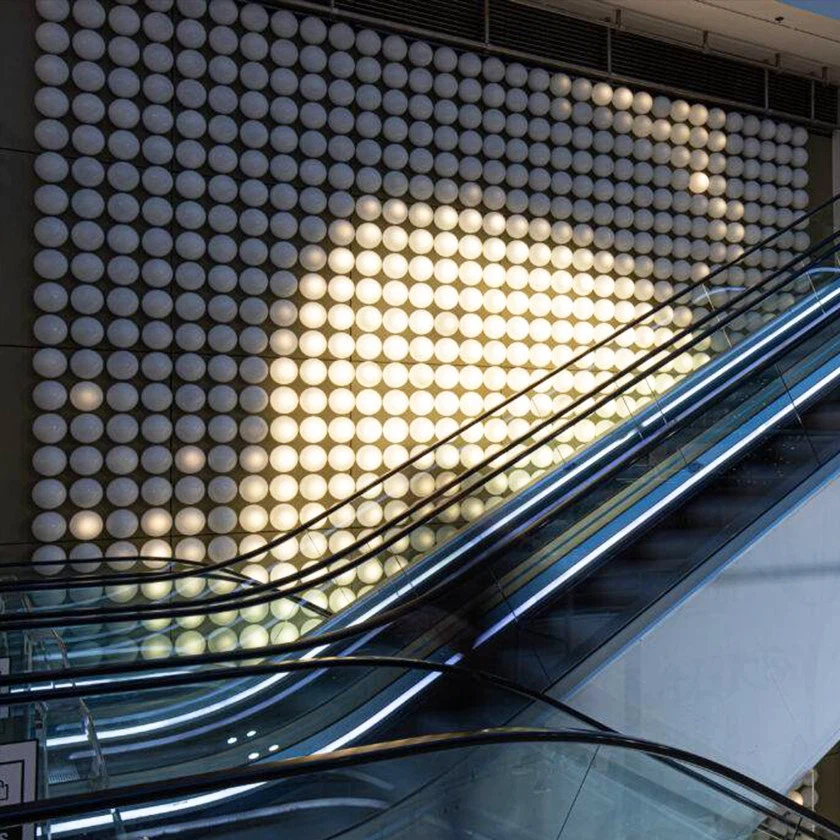
Hand-blown opal white glass globe shades with consistent dimensions and uniform light diffusion for permanent retail installations.
Luxury retail and hospitality ambient lighting
In 2015, Jingxin collaborated with a French client to design and produce opal white glass globe lamp shades for Galeries Lafayette in Paris. The project required a custom lighting solution that served as permanent wall decoration while delivering soft, even ambient light across a large retail interior. Solid opal white body coloration ensured consistent light quality across every unit, and the installation has remained in continuous service since 2015 — more than ten years of uninterrupted operation. This is the scenario where glass outperforms plastic by the widest margin, because consistent color and luminosity across hundreds of shades is precisely what plastic cannot guarantee over a decade.
Extreme-environment industrial lighting
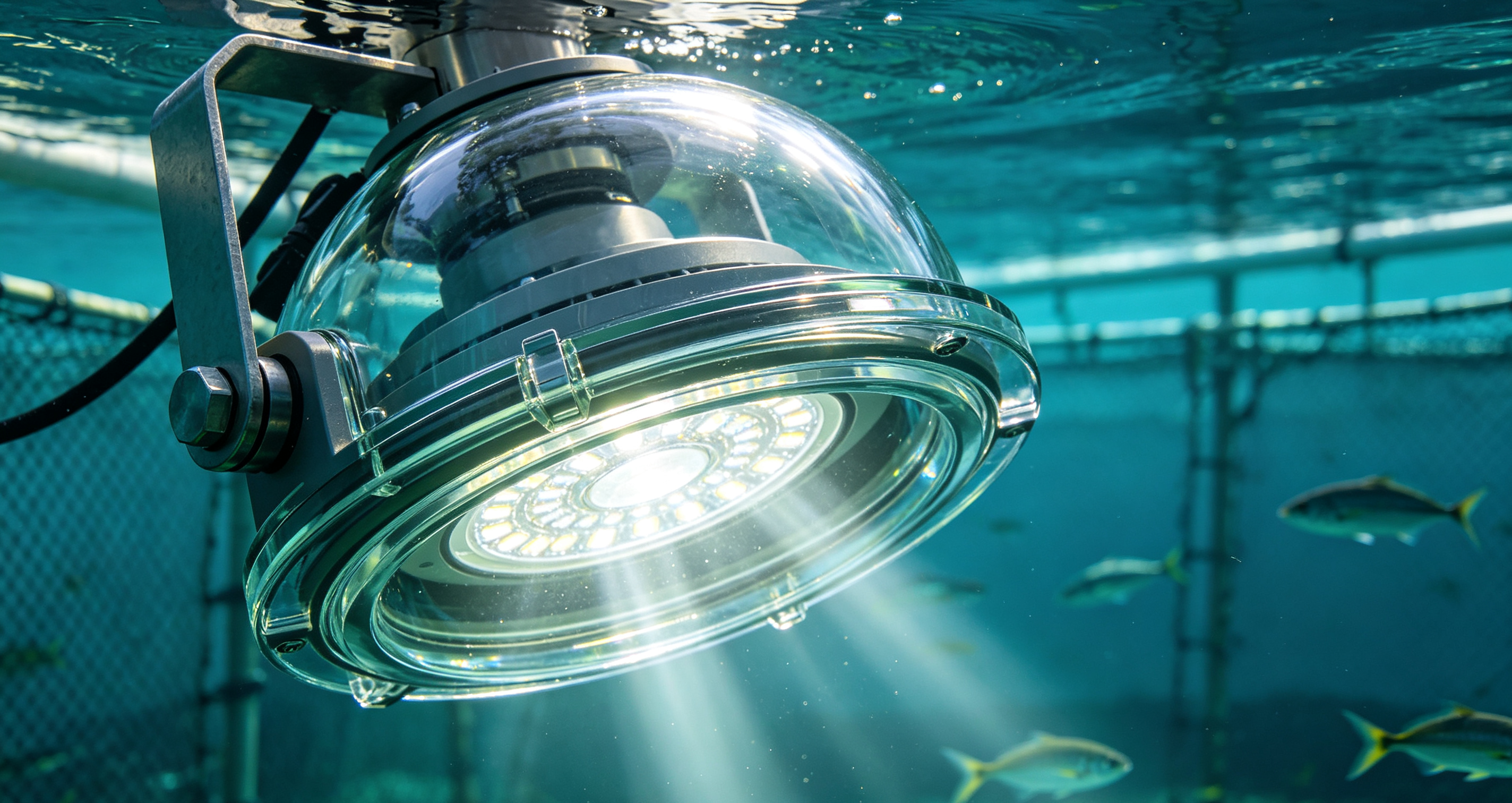
Custom ultra-thick glass lamp shades engineered for pressure resistance and sea water exposure in deep-sea aquaculture lighting.
In 2018, Jingxin produced a batch of ultra-thick transparent lamp shades with pressure and sea water resistance for Chilean customers in deep-sea fish farming. The shades had to withstand high pressure, saltwater corrosion, and continuous immersion while maintaining optical clarity underwater — an application where standard glassware products were not suitable and plastic would have failed outright. The case demonstrates the ceiling of what custom glass engineering can achieve when standard materials fall short.
Laboratory, food service, and medical environments
Environments that require hygienic, easy-clean surfaces and resistance to chemical exposure consistently favor glass. Borosilicate's inert surface does not react with most acids, alkalis, or solvents, and its smooth, non-porous finish does not absorb odors or permit bacterial retention the way some polymer surfaces can. For fixtures adjacent to food preparation, laboratory benches, or clinical areas, glass shades are the practical default.
Comparison Table: Glass vs. Plastic Lamp Shades for Commercial Lighting
| Factor | Plastic (Acrylic / PC) | Soda-Lime Glass | Borosilicate Glass | Opal Glass |
|---|---|---|---|---|
| Coefficient of thermal expansion | High | ~9 × 10⁻⁶/°C | ~3.3 × 10⁻⁶/°C | Comparable to soda-lime base glass |
| Thermal shock rating (verified product data) | Softens under sustained heat | Up to 120°C | −40°C to 260°C (JX1830); up to 550°C (JX1416) | Up to 120°C |
| Light output over ~10 years | Loss of roughly 20–30% | Negligible loss | Negligible loss | Negligible loss |
| Yellowing / hazing resistance | Yellows and hazes | Anti-yellowing | Anti-yellowing | Permanent diffusion, no yellowing |
| Light transmission | Typically 80–92%, decays over time | 85–95% (clear / ribbed) | 85–95% (clear) | 45–65% (diffused) |
| Impact resistance | High | Moderate | Moderate to high (thick-wall variants) | Moderate |
| Weight | Light | Heavy | Heavy | Heavy |
| Relative unit cost | Low | Mid | Mid to high | Mid to high |
| Customization (size, opening, finish) | High, via injection molding | High (blown / pressed) | High (blown / pressed) | High (blown / pressed) |
| Expected service life in commercial duty | Shorter | Long | Very long | Very long |
FAQ
Are borosilicate or opal glass lamp shades safer than plastic in commercial lighting?
In high-heat or thermally unstable applications, yes. Plastic softens and degrades under sustained heat, while borosilicate glass is rated for rapid temperature fluctuation from −40°C up to 260°C (JX1830) and up to 550°C in specific product configurations (JX1416). Opal glass is typically suitable up to around 120°C, which covers most ambient commercial fixtures. However, plastic remains appropriate for low-heat LED fixtures in high-contact areas where impact resistance outweighs thermal performance.
What certifications should I expect from a custom glassware manufacturer for commercial lighting shades?
For EU and global distribution, RoHS and REACH compliance is the practical baseline. Jingxin Glassware holds CE, RoHS, REACH, and SMETA-4P credentials. The RoHS test was performed by Intertek under certificate 251016112GZU-001 against IEC 62321 series methods, and the SMETA-4P social compliance audit was conducted by TUV Rheinland under certificate ZAA600149732. This documentation supports import clearance and buyer due-diligence requirements in regulated markets.
What are the typical MOQ, sample lead time, and production lead time for custom glass lamp shades?
For hand-blown glass lamp shades, MOQ typically starts around 500 pieces; machine-pressed glass generally starts around 2,000 pieces, with negotiable terms for trial orders and long-term programs. Sample lead time is normally 5–7 days after artwork and specification confirmation. Mass production runs approximately 20–30 days after sample approval, depending on order volume and customization complexity.
Can glass lamp shades be customized to fit non-standard lamp holders or specific fixture designs?
Yes. Custom fitter openings, outer diameters, wall thickness, and surface finishes are all available for OEM and ODM projects. Standard interfaces such as E27, E14, and G9 are covered by existing tooling, and new openings, flanges, or mounting interfaces can be developed from technical drawings or client-supplied samples. Custom glass formulations are also available when the application requires specific thermal resistance, pressure resistance, or sea water resistance.
Can I request samples before committing to a bulk order of custom glass lamp shades?
Samples are available upon request with a typical lead time of 5–7 days after specifications are confirmed. Sample cost may apply depending on the customization level and specification complexity, and freight is normally collect. For buyers evaluating borosilicate versus opal glass for a specific commercial project, requesting both material options side by side is the standard way to validate thermal performance, optical behavior, and fit before volume production. To start the process, reach out through the contact details below or request a quote directly.

Jingxin Glassware serves 1,000+ clients across 100+ countries in lighting, home decor, drinkware, and laboratory glassware.
Conclusion: Match the Material to the Fixture, Not the Other Way Around
For most commercial lighting projects, the material hierarchy is clear. Borosilicate glass removes thermal cracking risk in high-heat and rapid-cycling environments. Opal glass delivers the glare-free, color-consistent diffusion that hospitality and retail installations depend on. Soda-lime glass provides strong optical clarity at a lower cost for standard LED and CFL fixtures. Plastic remains a valid low-cost, impact-resistant option for low-heat, short-cycle, or budget-constrained decorative fixtures — but it is the wrong material whenever thermal stability, long-term light output, or installation-wide consistency matter.
The right decision is always the one that matches the fixture's actual conditions: its thermal profile, its ambient environment, its optical requirement, and its expected service life. Buyers who evaluate those four factors first will find that the material choice is not really a preference question — it is an engineering one.
Ready to Specify the Right Glass Lamp Shade?
Jingxin Glassware manufactures borosilicate, opal, and soda-lime lamp shades with full OEM and ODM customization — fitter openings, wall thickness, surface finishes, and custom glass formulations. Samples ship in 5–7 days.
Download the full Glass Lamp Shades Catalogue (PDF) or contact our team at jerry@cn-glassware.com to discuss your project specifications.
Have Questions or Need More Details?
Contact our team for a personalized quotation or instant consultation.
Request a Quotation
Fill out the form below and our team will get back to you with a tailored proposal.
WhatsApp Direct Chat
Prefer to chat in real-time? Message us on WhatsApp for instant assistance & quick answers.
- Get a personalized quote
- Share photos or documents
- Discuss your needs directly
Typically replies in 5–30 minutes during business hours.