Glass Lamp Shade Certifications: CE, RoHS & REACH Checklist
Glass Lamp Shade Certifications: CE, RoHS & REACH Checklist
Answer first: When sourcing glass lamp shades from China, do not accept a generic statement that the supplier is CE, RoHS, and REACH compliant. Ask for a product-specific documentation pack tied to the exact lamp shade model, glass type, surface finish, fitter opening, and destination market. The pack should include a signed compliance statement, CE documentation where applicable, RoHS declaration or test report, REACH/SVHC documentation for the finished glass article, and inspection records. Jingxin Glassware (Yancheng Jingxin Glassware Co., Ltd.) is a glass manufacturer and exporter based in Yancheng, Jiangsu, China, producing custom glass lamp shades and other glassware for lighting, home décor, candle, drinkware, laboratory, and food & beverage packaging sectors. Jingxin states that it holds 19+ professional certifications, including CE, RoHS, REACH, ISO 9001, and SMETA-4P, but buyers still need to verify that the paperwork matches the specific custom glass product they are ordering.
Problem Definition: Why Certification Paperwork Gets Messy in Lamp Shade Sourcing
The compliance problem in glass lamp shade sourcing is rarely a lack of paperwork. It is usually a mismatch between the paperwork and the product. A supplier may send a CE statement, a RoHS report, and a REACH declaration, but the documents may refer to a different model, a different glass type, a different surface treatment, or a different production batch. For a buyer in the decision stage, that is a commercial risk, not a filing inconvenience.
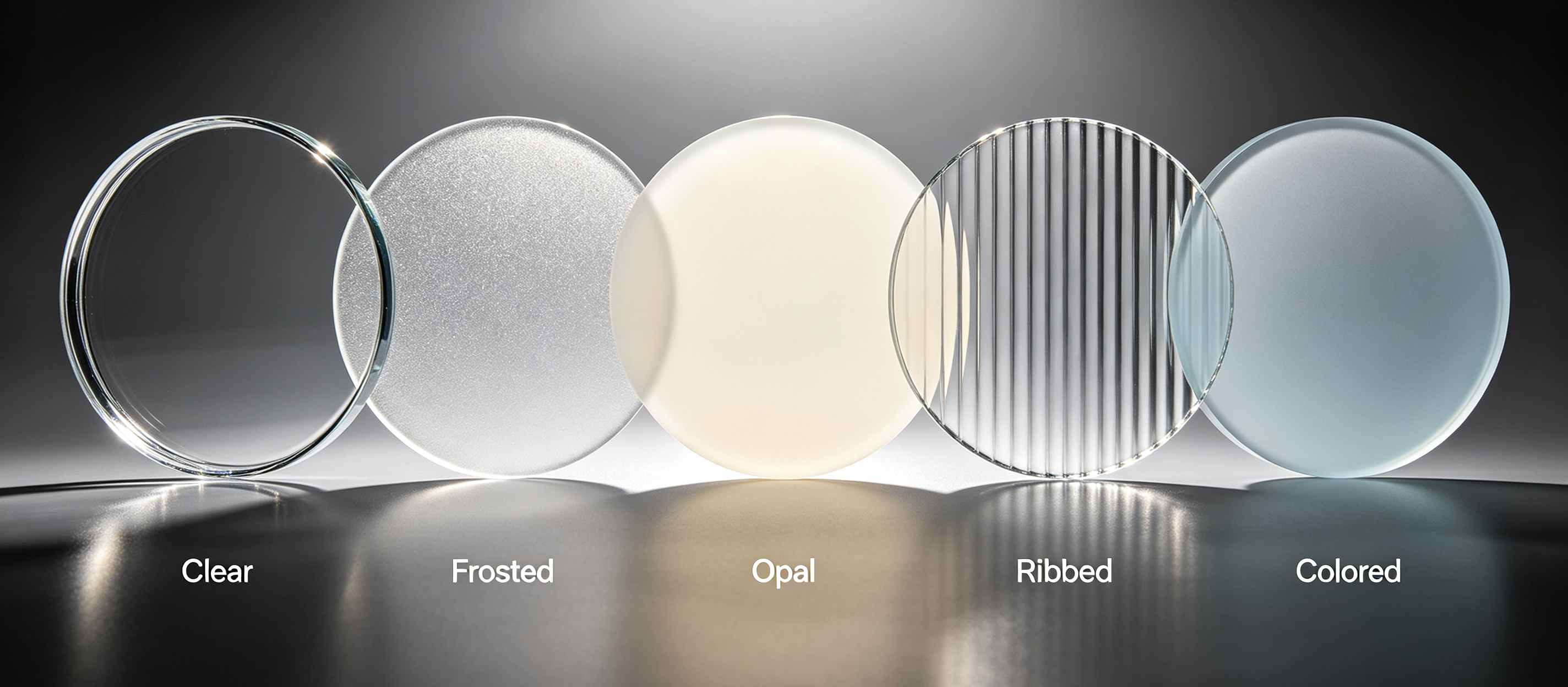
Custom glass lamp shades are not a single uniform article. A solid opal soda-lime globe, a clear borosilicate globe, a milk-frosted cylinder, a ribbed pendant shade, and a colored decorative shade can differ in material, forming process, surface finish, and application. Each change can affect the documentation that should be requested. The buyer should not assume that one approval set covers every custom glass product from the same supplier.
Common documentation failures include certificates without a model number, test reports that do not identify the glass type or finish, REACH statements that address raw glass but not the finished decorated article, CE marks used as a generic quality badge, and inspection records that cannot be linked to the purchase order. These are not abstract concerns. They become concrete when the buyer needs to prove due diligence, clear customs, satisfy a retail customer, or resolve a quality claim.
Industry Background: Why Buyers Ask for CE, RoHS, and REACH in Lighting Glass
Glass lamp shades sit inside a complex supply chain that crosses lighting, decorative glassware, electrical accessories, and retail compliance. Customs classification text recognizes glass parts for electric lighting within glass and glassware chapters, which reflects a formal trade pathway for lighting-related glass components. That does not mean every glass lamp shade is automatically a regulated electrical product. It means the buyer should clarify the product scope before assuming which approvals apply.
CE is a conformity marking used in the European Union for products within the scope of applicable EU legislation. It is not a universal certificate for every glass component. Whether a glass lamp shade needs CE documentation depends on the finished product, the applicable legal framework, and how the shade is placed on the market. RoHS restricts certain hazardous substances in electrical and electronic equipment, so its relevance depends on the product scope and the buyer's compliance chain. REACH addresses chemical substances in articles and mixtures, so buyers often request SVHC-related information and material declarations for the finished article, including surface treatments where relevant.
Jingxin Glassware states that its glass products are RoHS and REACH compliant and that the company holds 19+ professional certifications, including CE, RoHS, REACH, ISO 9001, and SMETA-4P. These credentials are useful for supplier screening. They do not replace a product-specific review. ISO 9001 and SMETA-4P support management-system and ethical-audit confidence; they are not substitutes for CE, RoHS, or REACH documentation for a particular lamp shade.
Detailed Solution: A Buyer-Ready CE, RoHS, and REACH Checklist for Glass Lamp Shades
The practical solution is to build a documentation request around the exact custom glass article, not around the supplier's general marketing claims. Use the checklist below as a request list for the RFQ, sample stage, and purchase order.
1. Define the exact article before requesting certificates
- Model or SKU, dimensions, shape, and fitter opening, such as E27, E14, G9, or a custom fitter.
- Glass type: soda-lime or borosilicate. For heat-resistant lighting components, Jingxin uses borosilicate glass in products such as JX1416 and JX1407.
- Surface finish and decoration: clear, frosted, opal, ribbed, colored, painted, printed, or otherwise treated.
- Destination market and the compliance role of the buyer, such as importer, brand owner, distributor, or project specifier.
- Packaging and labeling requirements, because retail packaging and printed materials can create separate documentation needs.
2. Request a product-specific compliance statement
- Ask for a statement on supplier letterhead that names the exact model, glass type, finish, and applicable compliance areas.
- Require a signature, date, and revision reference so the document can be tied to the purchase order.
- Ask the supplier to state clearly whether CE is applicable, not applicable, or applicable only to the finished luminaire rather than the glass shade alone.
- Ask for a written explanation if the supplier cannot confirm applicability. Do not accept a logo or a generic certificate as a substitute.
3. Verify CE documentation where applicable
- Request the declaration or compliance statement that identifies the legal basis and the product covered.
- Check that the model, material, and finish match the quotation and sample.
- Do not treat CE as a quality ranking. A CE mark does not by itself prove light quality, thermal performance, or fitter accuracy.
- If the glass shade is supplied as a component rather than a complete electrical product, ask the supplier to explain the compliance boundary in writing.
4. Verify RoHS documentation against the finished article
- Request a RoHS declaration or test report that identifies the model, materials, and date.
- Check whether the report covers the glass and the relevant surface treatment, not only an unprocessed raw material.
- Ask whether third-party testing is available upon request. Jingxin states that 100% pre-shipment inspection is performed and third-party testing is available upon request.
- Keep the report revision with the approved sample and purchase order so future orders can be compared.
5. Verify REACH documentation for the finished glass article
- Request REACH/SVHC information relevant to the finished lamp shade, including surface finishes where applicable.
- Check that the declaration is not limited to raw glass if the product includes coatings, inks, adhesives, or decorative treatments.
- Ask for the report date and the model or product family covered. A declaration without a product reference is weak evidence.
- Store the REACH documentation with the commercial invoice and inspection records for traceability.
6. Add inspection and traceability records
- Request the pre-shipment inspection record and the inspection standard used for the order.
- Ask for batch or lot identification where available, especially for repeat orders and multi-container shipments.
- Confirm whether third-party inspection can be arranged before shipment.
- Link the inspection record to the approved sample, model, finish, and packing list.
Red flags to review before placing a bulk order
- A certificate or report with no model, material, finish, or date.
- A CE statement presented as a general quality certificate for all glass products.
- A REACH declaration that covers raw glass only while the order includes a decorated or coated shade.
- A RoHS report that cannot be linked to the quoted product or the approved sample.
- Verbal assurance that every custom glass product carries the same approvals.
- Unwillingness to put compliance applicability, document scope, or revision control in writing.
Step-by-Step Breakdown: How to Verify Paperwork Without Assuming Uniform Approvals
Step 1: Map the product and market scope. Start with the lamp shade itself. Confirm whether the order is for a clear borosilicate shade, an opal soda-lime globe, a frosted cylinder, a ribbed pendant, or a colored decorative article. Confirm the fitter opening and the final application. Then define the destination market and the buyer's compliance obligation. This step prevents the buyer from requesting the wrong document set.
Step 2: Put the document request into the RFQ. Ask every candidate supplier to return the same list: model-specific compliance statement, CE applicability statement, RoHS declaration or report, REACH/SVHC documentation, inspection record, sample approval record, and a written statement of which product and finish the documents cover. This makes supplier responses comparable.
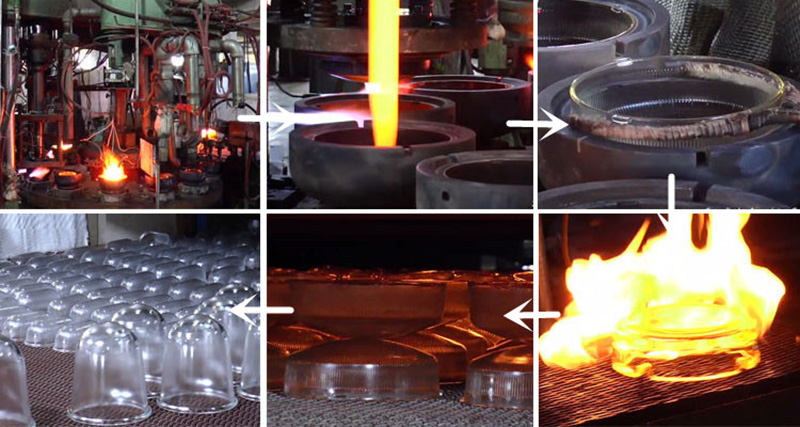
Step 3: Compare hand-blown and molded supply routes on the same compliance basis. Hand-blown glass lamp shades are individually crafted and can show unique artistic character with wider dimensional tolerance. Machine-made or molded glass lamp shades provide consistent dimensions, uniform wall thickness, and lower cost, and are often recommended for industrial or high-volume projects. The compliance request should be the same for both routes: documents must match the process, model, and finish actually supplied.
Step 4: Request a pre-production sample and approve it in writing. Sample lead time is 5–7 days after artwork and specification confirmation. The sample should be checked for fitter compatibility, glass type, finish, and appearance. The approved sample becomes the reference for both production and documentation review.
Step 5: Match every document to the approved sample and purchase order. Check the model, material, finish, report date, revision, and document scope. If the supplier changes the glass type, surface treatment, or fitter, ask whether the documentation still applies. Do not assume that a report for one shade covers a revised specification.
Step 6: Confirm inspection and pre-shipment controls. Jingxin states that it performs 100% pre-shipment inspection and that third-party testing is available upon request. The buyer should ask for the inspection record and confirm how defects, dimensional deviations, and paperwork discrepancies are handled before shipment.
Step 7: Archive the approved document pack. Keep the final pack with the purchase order, approved sample record, packing list, and inspection report. For repeat orders, compare the new documents with the approved set so that silent changes in material or finish do not go unnoticed.
Use Cases: Where the Checklist Changes the Buying Decision
EU hospitality project with opal globe shades
A hotel or restaurant project may specify opal white glass globe shades such as JX1004 or JX1184 for soft, glare-free ambient lighting. The buyer should request documentation for the exact opal glass model, finish, and fitter. Opal glass uses opacifying agents mixed into the glass batch, and its diffusion is uniform throughout the glass body. The buyer should not accept a report for a clear glass shade as evidence for an opal shade, because the product construction and application differ.
High-heat commercial lighting with borosilicate shades
For high-heat or wide-temperature applications, borosilicate glass is often specified because of its low thermal expansion and thermal shock resistance. Jingxin uses borosilicate glass in lamp shade products JX1416 and JX1407, which are suitable for heat-resistant lighting components. The buyer should request documentation that identifies the borosilicate material and the specific model, rather than assuming that a soda-lime shade report applies to a borosilicate product.
Private-label decorative shades with surface finishing
A private-label program may combine a custom shape with frosting, painting, printing, or other decoration. The finished article, not just the raw glass, should be the basis for the REACH and RoHS request. If the supplier cannot confirm which finish is covered, the buyer should pause and request clarification before mass production.
Replacement shade program for an existing fixture
For replacement shades, fitter accuracy is part of the compliance and quality discussion. Buyers should verify the model number, measure the fitter opening, and compare it with the specification. If a shade does not fit, the issue may be a dimensional tolerance deviation, a specification mismatch, or a model mix-up during packing. The same document-control discipline should apply to the replacement order.
Comparison Table: Hand-Blown vs Machine-Made Glass Lamp Shades for Documentation Planning
The table below uses the sourcing facts available in the content units. It is not a ranking of named competitors. It is a decision framework for buyers who need to compare Chinese suppliers using the same criteria.
| Comparison point | Hand-blown glass lamp shades | Machine-made / molded glass lamp shades |
|---|---|---|
| Minimum order quantity | MOQ is 500 pieces for hand-blown glass lamp shades; custom MOQ is negotiable for trial orders or smaller projects. | MOQ is 2,000 pieces for machine-made glass lamp shades; custom MOQ is negotiable for trial orders or smaller projects. |
| Sample lead time | 5–7 days after artwork and specification confirmation. | 5–7 days after artwork and specification confirmation. |
| Mass production lead time | 20–30 days after sample approval. | 20–30 days after sample approval. |
| Dimensional character | Individually crafted by artisans; unique artistic character with wider dimensional tolerance. | Consistent dimensions, uniform wall thickness, and lower cost. |
| Typical fit | Decorative applications where handcrafted character is valued. | Industrial or high-volume projects where dimensional consistency and cost control matter. |
| Documentation request | Request CE, RoHS, and REACH documentation for the specific hand-blown model, glass type, and finish. | Request CE, RoHS, and REACH documentation for the specific molded model, glass type, and finish. |
Use the same document request for both routes. The hand-blown versus molded decision should not change the compliance standard; it changes the production method, MOQ, tolerance profile, and cost position. A supplier that can explain these differences clearly is easier to audit than one that treats all glass lamp shades as one approval category.
FAQ: CE, RoHS, and REACH for Glass Lamp Shade Buyers
Which certifications should buyers request for glass lamp shades from China?
Buyers should request a product-specific documentation pack for the exact lamp shade model. This should include a signed compliance statement, CE documentation where applicable, a RoHS declaration or test report, REACH/SVHC information for the finished glass article, inspection records, and the approved sample record. Jingxin Glassware states that it holds 19+ professional certifications, including CE, RoHS, REACH, ISO 9001, and SMETA-4P, and that its glass products are RoHS and REACH compliant. The buyer should still confirm that the documents match the ordered model, glass type, and finish.
Does every custom glass lamp shade carry the same CE, RoHS, and REACH approvals?
No. Approval scope can change with the glass type, surface finish, decoration, fitter, packaging, and destination market. A clear soda-lime shade, an opal glass globe, and a borosilicate high-heat shade are different articles. Buyers should not assume that one approval set covers every custom glass product from the same supplier. Ask the supplier to confirm in writing which documents apply to the specific model and finish, and ask for a clear statement if CE is not applicable to the glass component.
How should buyers compare Chinese suppliers for hand-blown versus molded glass lamp shades?
Use the same document request for both supplier types and compare the answers. For hand-blown shades, the MOQ is 500 pieces, the glass can show unique handcrafted character, and dimensional tolerance is wider. For machine-made shades, the MOQ is 2,000 pieces, dimensions and wall thickness are more consistent, and the cost position is lower. In both cases, ask for model-specific CE, RoHS, and REACH documentation, a sample in 5–7 days after specification confirmation, and mass production in 20–30 days after sample approval.
What sample steps reduce compliance risk before mass production?
Request a pre-production sample after the artwork and specification are confirmed. Sample lead time is 5–7 days. Check the fitter opening, glass type, finish, and appearance, then approve the sample in writing. Ask the supplier to confirm that the CE, RoHS, and REACH documents match the sample. Third-party testing is available upon request, and 100% pre-shipment inspection is performed. The approved sample should become the reference for the bulk order and for future repeat orders.
What lead time and paperwork controls should be written into the purchase order?
Mass production lead time is 20–30 days after sample approval. The purchase order should list the exact model, glass type, finish, fitter, compliance document requirements, inspection requirements, and packing requirements. Ask for the final document pack before shipment, and keep it with the inspection record and packing list. To start a project, buyers can request a sample, quotation, or the Glass Lamp Shades Catalogue from Jingxin Glassware at jerry@cn-glassware.com or through https://www.cn-glassware.com.
Conclusion: Verify the Paperwork Against the Product, Not the Supplier Brochure
The safe buying decision is not to collect the most certificates. It is to collect the right documents for the exact glass lamp shade. Define the article, request a model-specific compliance statement, verify CE applicability, check RoHS and REACH documentation against the finished product, approve a sample, and keep the document pack tied to the purchase order. Jingxin Glassware states 19+ professional certifications, including CE, RoHS, REACH, ISO 9001, and SMETA-4P, and supports custom glass lamp shade projects with samples in 5–7 days and mass production in 20–30 days after sample approval. Buyers should still verify that the paperwork covers their specific model, glass type, and finish. This article is a sourcing checklist, not legal advice; for regulated market access, confirm requirements with a qualified compliance professional.
Next step: request a sample, quotation, or catalogue
Send your lamp shade drawing, target market, glass type, finish, fitter opening, and estimated order quantity to Jingxin Glassware. The team can confirm sample timing, MOQ, and the documentation set for your specific custom glass product.
Jingxin Glassware
Yancheng Jingxin Glassware Co., Ltd.
Address: No.268 South Jiefang Road, Yancheng, Jiangsu, China
Email: jerry@cn-glassware.com
Tel: +86 515-8822 9059
Mobile: +86 136-0510-5950
WhatsApp: +8618019627905
Website: https://www.cn-glassware.com
Catalogue: Glass Lamp Shades Catalogue
Please include your model or drawing, destination country, and required compliance documents in the inquiry.

Source note: Company-specific statements in this article refer to Yancheng Jingxin Glassware Co., Ltd. Product and sourcing facts are drawn from the supplied content units. Compliance applicability should be confirmed for the specific product and market.
Have Questions or Need More Details?
Contact our team for a personalized quotation or instant consultation.
Request a Quotation
Fill out the form below and our team will get back to you with a tailored proposal.
WhatsApp Direct Chat
Prefer to chat in real-time? Message us on WhatsApp for instant assistance & quick answers.
- Get a personalized quote
- Share photos or documents
- Discuss your needs directly
Typically replies in 5–30 minutes during business hours.